Every day, your restaurant could be losing hundreds of would-be customers. People search for sushi rolls or pizza—but land on competitors’ websites. Why? Often the issue is your website: basic structural or content errors and slow page speed can cost thousands of orders a year. The good news: it’s all fixable.
We audited 100+ food-delivery sites and pinpointed recurring issues that hinder growth and revenue.
Businesses in the top three search results capture up to 75% of organic traffic—so better rankings translate directly into more customers on your site.
As soon as we improved rankings, traffic climbed. Here are a few client results:
- Yobidoyobi grew by 848.2% over four years.
- Sushiberu grew by 27% in eleven months.
Industry data shows that 20% increase in traffic can translate into 15–40% higher profit - often higher in food delivery. That’s why fixing site issues and improving your search rankings is critical.
We also need to consider how customers perceive the website. On a food-delivery site, users expect great offers, easy menu navigation, and a fast, hassle-free checkout. If your site isn’t meeting these expectations, customers are likely to order elsewhere. Let’s unpack the most common mistakes holding food-delivery sites back.
MISSING CATEGORY LANDING PAGES.
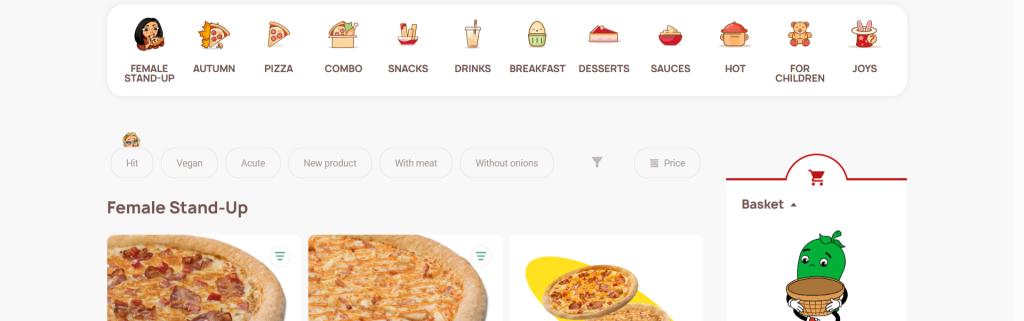
Many websites put everything on the homepage. Customers end up wading through a single, all-in-one catalog to find a dish—navigation suffers. Moreover, without dedicated category landing pages, SEO becomes significantly harder: if categories can’t have unique title tags and meta descriptions, it’s difficult to capture organic traffic for category-intent queries. For example, searches like “hot rolls”) or “kids’ menu” won’t land on your site unless those categories have their own pages with unique metadata.
Dedicated category pages make navigation easier and help your site rank higher. Separate category pages let you provide rich descriptions, target relevant keywords, and craft compelling copy that ranks in search. For example, the “Sets” category can present each set with a description, key benefits, a gallery, customer reviews, and chef’s recommendations.
CATEGORY PAGES WITH INCORRECT/MISSING META TAGS
Even with category pages exist, a common issue is missing or duplicate metadata. Many sites reuse the same titles and descriptions across pages. This creates internal competition in search and reduces overall visibility.
Here’s what the “Hot Rolls” page title looks like:

This title doesn’t reflect the page’s content or prompt users to purchase hot rolls. Customers searching for that dish may never find the page. Adding unique, keyword-aligned titles and meta descriptions improves visibility and increases CTR (click-through rate).
SLOW MOBILE LOAD SPEED
A frequent issue on food-delivery websites is slow mobile performance. Mobile customers are more likely to buy impulsively, and page speed directly influences conversion. Delays or broken/misaligned layouts frustrate users and cost you orders.
Google’s data shows that every additional second of load time can reduce conversions by up to 20%. If a page takes more than three seconds to load, 53% of users leave.
MISSING “PROMOTIONS” PAGE OR UNIQUE SELLING PROPOSITION (USP)
Some customers decide whether to place an order based on promotions and deals. If the site offers nothing unique, shoppers will head to competitors for a better deal. Many food-delivery sites skip a dedicated Promotions page - an easy win for highlighting active discounts, bonuses and rewards to boost acquisition and retention.
Beyond a dedicated Promotions page, spotlight your unique value proposition (USP) on the homepage so visitors see key offers immediately.
SEARCH BOT ROADBLOCKS
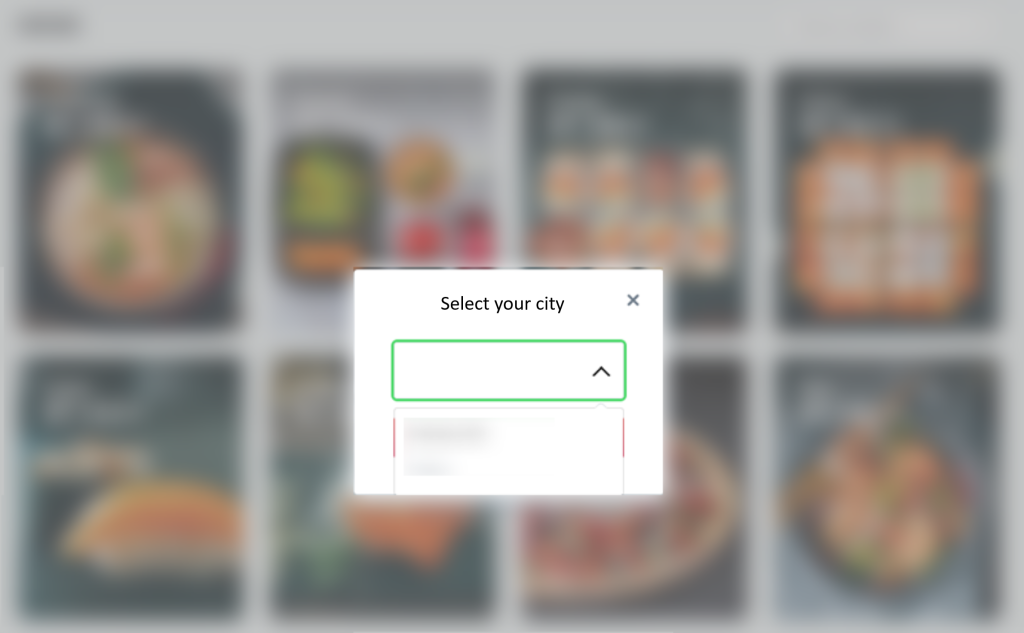
Many major food-delivery sites force a city selection before granting access. If you don’t choose a city, you can’t proceed. This configuration creates problems for search engines, since search bots can’t bypass the gate. Consequently, much of your content remains inaccessible. If search engines can’t access the content, they can’t rank it - your pages won’t appear in results regardless of how strong your copy or UX are.
LIMITED CATEGORY STRUCTURE
Many websites rely only on top-level categories—“Rolls” and “Sushi”—with no further breakdown. That isn’t enough to capture diverse search intent. For example, a search for “hot rolls” differs from “salmon rolls” and each merits its own category page.
A more detailed category structure captures intent-specific queries and helps you attract a wider range of customers with different preferences.
LACK OF VENUE PHOTOS AND RESTAURANTS DETAILS
If your restaurant provides both delivery and dine-in, show the space so customers can picture the experience. A well-designed, photogenetic interior attracts visitors looking for a cozy atmosphere or Instagram-worthy shots. Some websites omit these photos entirely or rely on generic images that don’t reflect the real location.
Pro tip: Even a single fix can lift traffic and profitability by 15% or more. Stop losing customers to technical gaps and weak optimization. Request a free SEO audit and get step-by-step recommendations that improve rankings and revenue.
By Sofya Gaeva, Founder of Seoslon